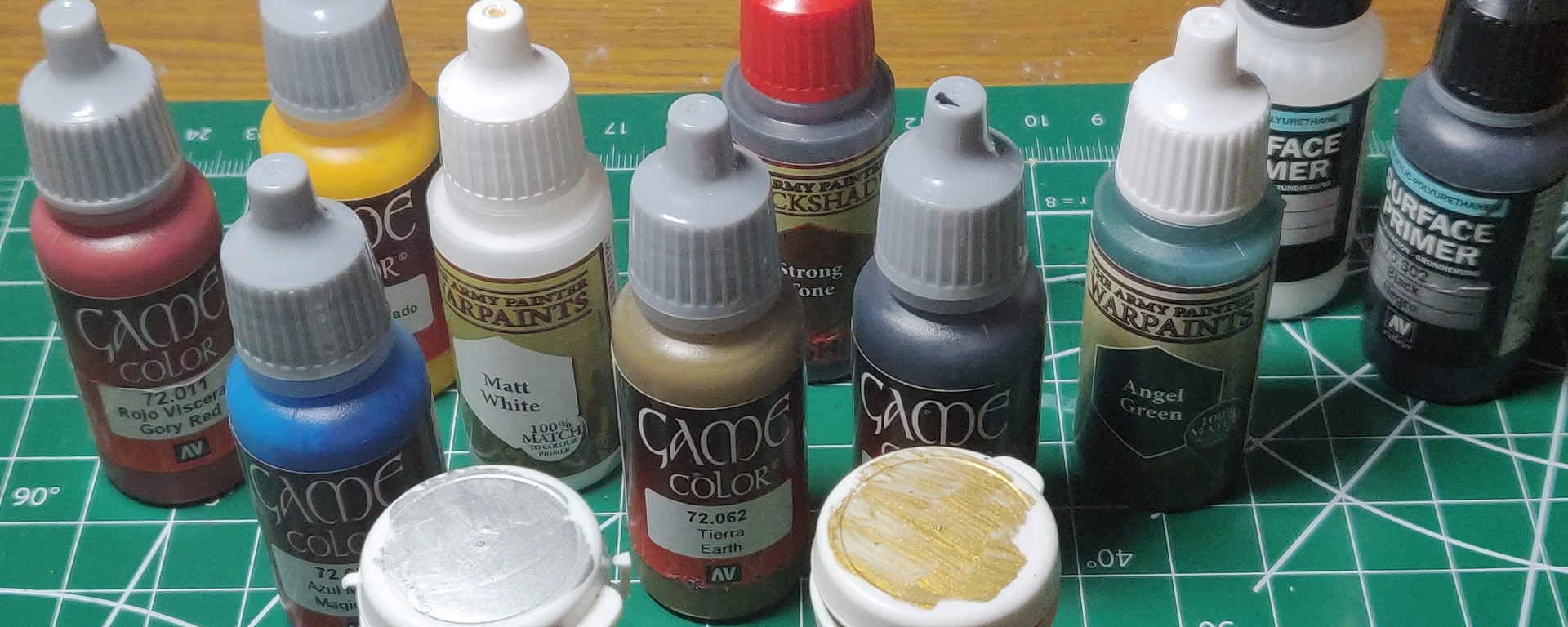
Now that we’ve talked about minis, let’s talk about the next important bit: paint. This may seem a little intimidating; there are a lot of brands, colors, and types to choose from, but it’s not as overwhelming as it may seem at first.
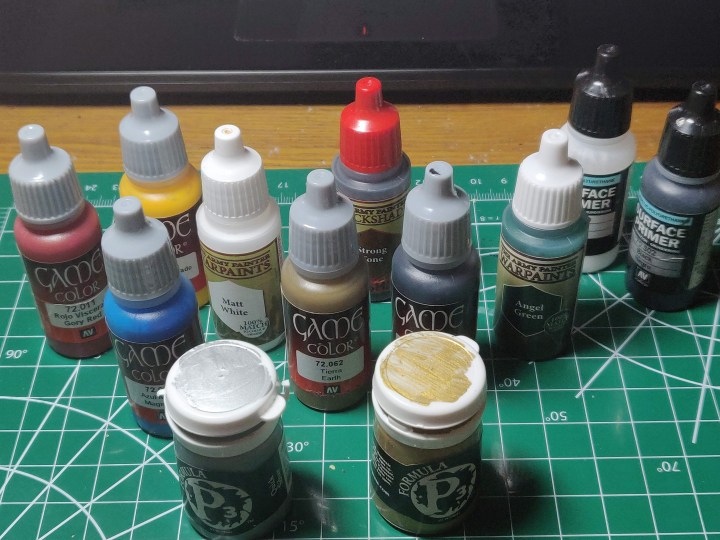
You’ll notice that there are a few different brands in the photo, but there’s no need to mix and match; if you’re comfortable with one brand, go with that. In fact, you may run into issues with mixing two brands of paint, based on formulas and pigmentation, so in the beginning, you’ll want to stick to one brand. I’ve only included multiple brands in the photo to give you an idea of what’s out there. What’s important is that you start with paint that is formulated for miniatures. You may be tempted by the $1 a bottle craft paint, but trust me, you will have a much better experience and a much better looking mini if you go with a paint that is designed to be used on the figures you’ll be painting. Craft paint has a coarser pigment and can separate to the point of uselessness when being thinned. It can also obscure detail, and will often look chalky when dry, especially if you like to drybrush. Craft paint is better suited to larger projects, like terrain pieces, than the figures themselves.
So let’s take a look at the different brands of paint I use.
VALLEJO
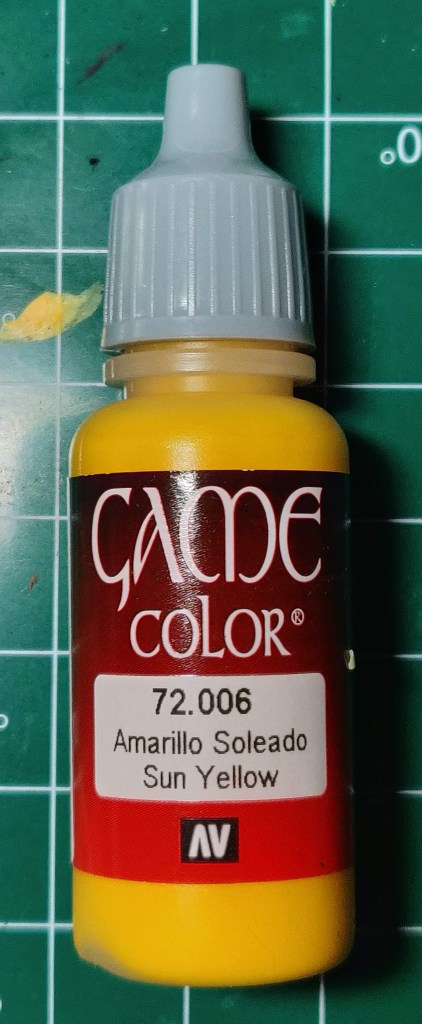
Hands down one of my favorite brands is Vallejo. Their Game Color line is designed for use with minis for gaming, offers a very large range of vibrant colors. They come in convenient eye-dropper bottles, which help when keeping notes on mixing ratios and formulas. Most game stores will have individual bottles for around $3-4, so they won’t break the bank if you build your paint collection over time. They offer a convenient Introductory Set if you want to dip your toes, and a 72-color Basic Paint Set if you want to dive in head first.
A couple things to keep in mind with Vallejo paints: they will need to be thinned when used (but this is common; almost every paint will need to be thinned), and certain colors have a tendency to dry out quicker than others in the bottle. In my experience, the yellows, oranges, and purples have hardened in the bottle before I’ve had a chance to go through them all, but your mileage may vary. Other users have noticed that some colors can dry glossy or with a satin finish, which may affect your washes and shading. Overall, though, you can’t really go wrong starting with Vallejos. The paints are easy to work with and provide good coverage in multiple thin coats. It’s an extensive line with an excellent selection of paint for gaming minis.
ARMY PAINTER
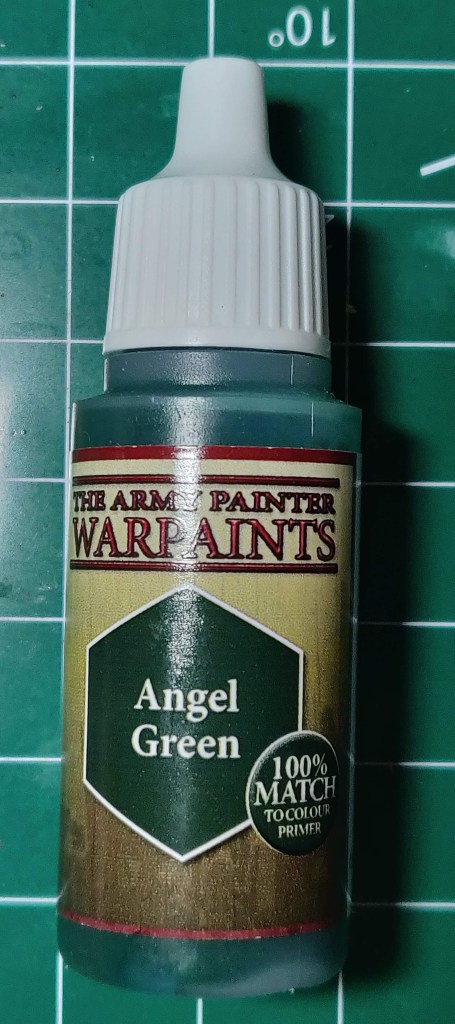
Army Painter is a newer company, and is mostly geared toward painting a lot of minis quickly, usually for wargaming. To facilitate this, most of their basic Warpaint line is strongly pigmented, and will need thinning even more than the Vallejos. This can cause the paint to bind up a little in the bottle, and will need extensive shaking by hand to fully mix the paint. You can also pop the eye-dropper tip off and stir the paint with a straightened paperclip. This isn’t a huge drawback, but it is something to keep in mind if you notice the first few drops out of a bottle seem a little thin, or poorly mixed. Army Painter also has a few branded lines, too, like this Zombicide set and this Official Dungeons & Dragons Adventurer’s Paint Set (including Minsc and Boo!). Like Vallejo, they offer a smaller Starter Set as well as a larger 50-bottle Paint Set. Their prices are comparable to Vallejo, at about $3-4 a bottle. I found that once I got the paint properly mixed and thinned, I got pretty decent coverage with no detail obscured. Army Painter also offers a range of spray primers that offer 100% matches to their colors, so if you’re going to be painting a lot of minis with one dominant color (like Space Marines, for example), you can get most of your work done in the primer phase.
Where Army Painter really shines, in my opinion, is their washes. Their Dark, Strong, and Soft tones will have you covered for about 90% of your shading needs. Since washes are key to getting an okay mini that looks great on the table, we’ll be talking about these a bit more in-depth once we get to basic techniques. Army Painter does offer more than these three, and you will eventually want to include those in your palette, but to start with, you can get a lot of mileage out of Strong Tone alone. Overall, Army Painter has a solid line of good quality paints tailored to the specific needs of board, role-playing and wargamers, and has a lot to offer new painters.
PRIVATEER PRESS P3 PAINT
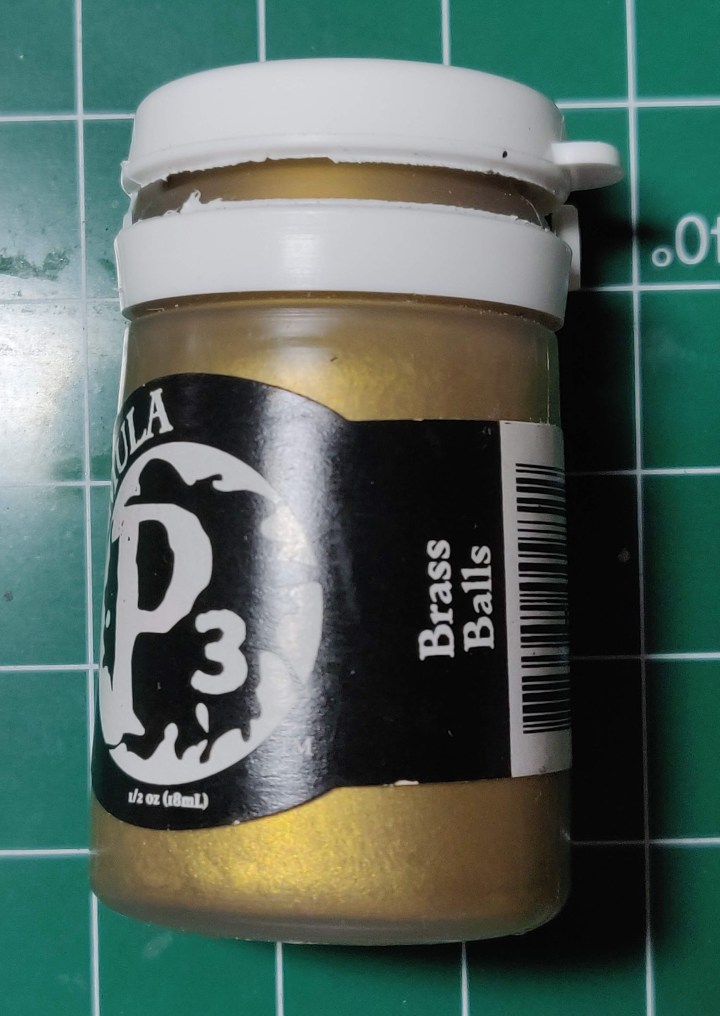
P3 is Privateer Press’ paint line, designed for use with WarMachine and Hordes. As such, you’ll find a lot of faction-specific paint names (Cygnar Blue Highlight, Menoth White Base, etc.), but they shouldn’t be too overwhelming once you get the hang of it. P3 is a very good quality paint, and is also a solid choice for anyone getting into painting for the first time. Obvious differences are that the paint comes in pots with plastic snap lids instead of eye dropper bottles. This is significant, since it will require you to use a brush or similar tool to dip the paint out onto your palette, and you’ll also want to make sure the entire lid seals around the mouth of the jar. If it doesn’t seal, the paint will dry out more quickly. You’ll want to thin these paints, too. One drawback to the pots is that it’s harder to measure out the precise ratios if you’re mixing colors or thinning to a specific point. At the right consistency, P3 covers fairly well.
P3 also offers paint sets, but they’re geared to getting players started with a certain faction, so you won’t see a basic introductory paint set; they’ll be mostly 6 paint sets of basic faction colors. Still, if you’re painting for wargaming, the P3 line is a great way to get started.
CITADEL
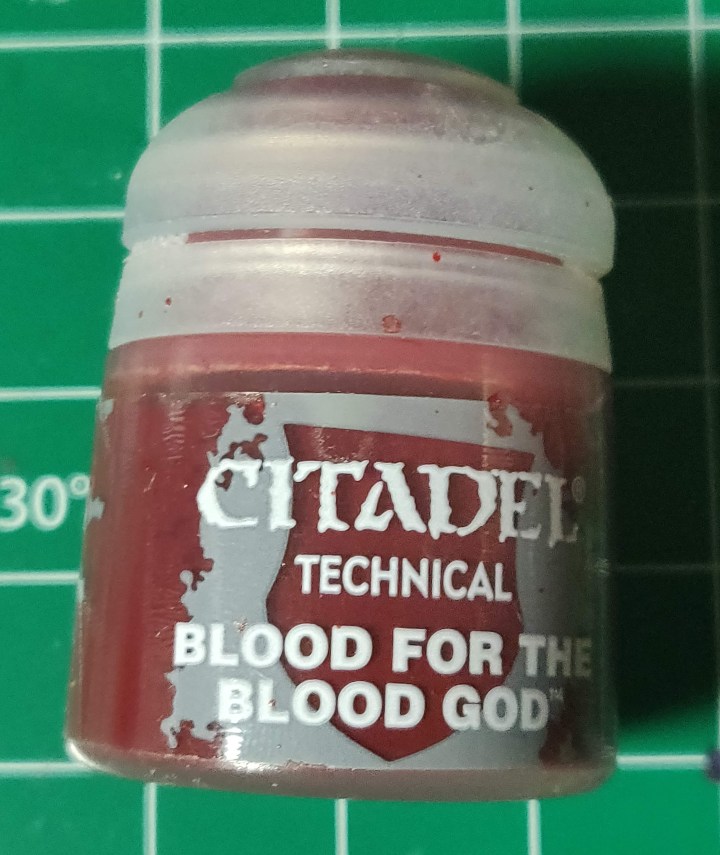
Like P3, Citadel makes its own line of paint designed for use with its games; you’ll find a lot of GW specific colors and references in the names. Also like P3, they come in pots with snap lids. I don’t have as much experience with Citadel as I do Vallejo and P3; I’ve bought one or two of their basic colors and generally find them to be on par with P3 in terms of ease of use and coverage. The Citadel pots have a tendency to pop up near the hinge when closed, so you’ll need to make sure they seal properly when not in use. Citadel does sell paint sets, so if you want to grab a selection to start with they’ve got you covered. If you want to pick your own, they’ve organized them into various categories, based on what you’re looking for (base, shade, layer, edge, glaze).
Citadel also makes a line of Technical and Effects paint that I really like using on minis to get certain effects. Blood For The Blood God is a glossy, translucent red that looks like fresh blood, and Nihilakh Oxide is a bright verdigris wash that is perfect for aging metal and creating an ethereal, ghostly effect on undead minis. Agrellan Earth is a smooth, thick paint that dries like cracked mud, and Armageddon Dust is an earthtone with microbeads that simulate coarse dirt. Ryza Rust is a dry paint that is designed for drybrushing rust effects on metal, and Nurgle’s Rot is a clear glossy yellow green that can be brushed on to achieve a sickly discharge effect. Citadel’s washes are also top-notch; Nuln Oil and Gryphonne Sepia (sadly discontinued– but replaced with Seraphim Sepia!) have had a spot on my palette for years. Overall, Citadel’s Technical line is an excellent resource to add to your arsenal once you get comfortable and want to expand your skillset. After all, there’s nothing like a killer base or some artful blood spatter to really make your okay mini pop.
REAPER
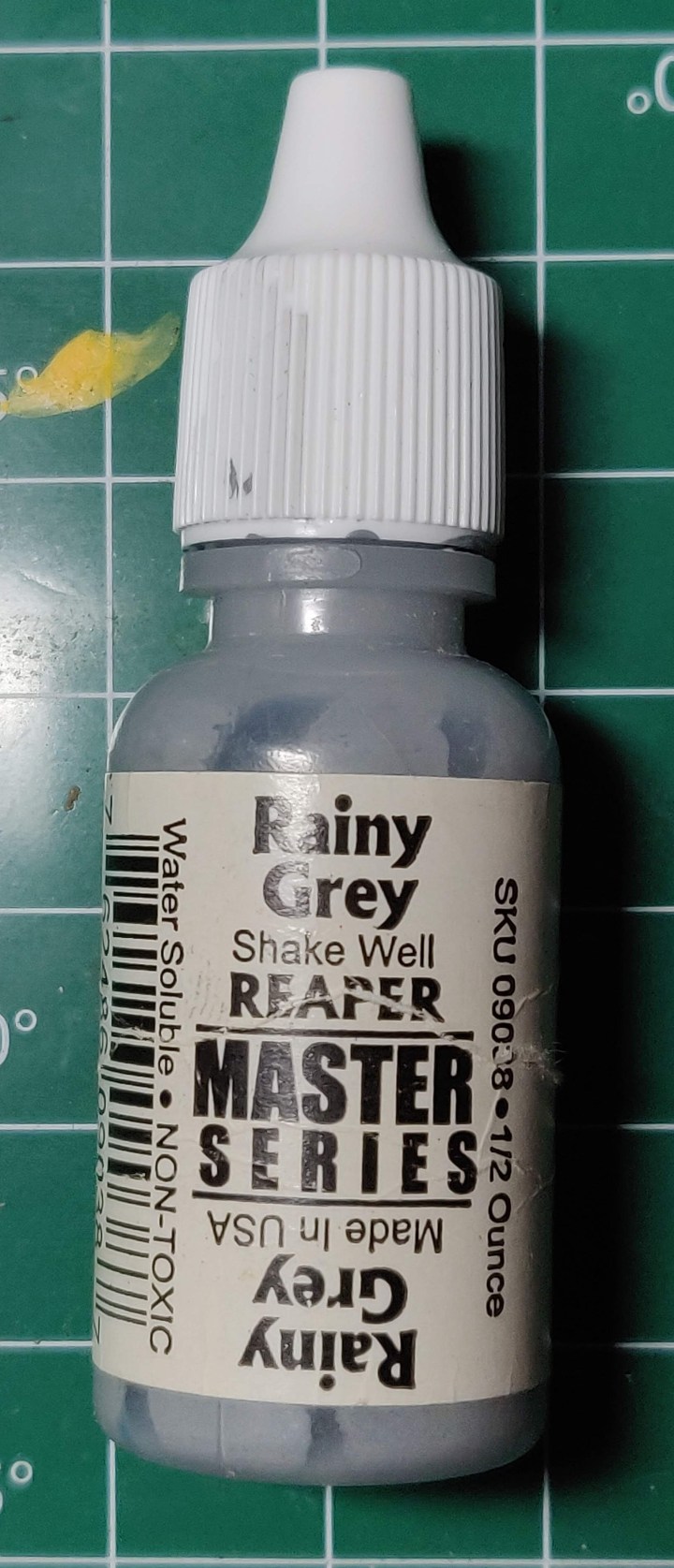
Reaper Master Series paint is produced by Reaper (obvs) and replaced their Pro Paint line several years ago. On the whole, I have the least amount of experience with MSP because, quite frankly, I’m not a fan. This is entirely personal preference, though, and has nothing to do with the quality of the paint (it’s excellent), and is pretty much my subjective opinion. Having said that, MSPs will give you excellent coverage, and come in the same eye dropper bottles as Vallejo and Army Painter, so you’ll get the advantage of precise mixing. One thing Reaper did with the MSP line that I think is an excellent idea is each shade has a triad of shade, base, and highlight, which makes it very easy to add depth to figures. It’s very similar to GW’s base, layer, edge system, except they take all of the guesswork out of matching the colors. But for whatever reason these paints have never clicked with me, so take that for what it’s worth.
Reaper also offers starter sets, like this basic Master Series Paints Starter Set, and this Learn to Paint Bones set. Even though I personally prefer Vallejos, if you like what MSP has to offer, then this is the product for you! Always go with what you feel works best for you, and you’ll always make the right decision.
 The Okay Tabletop
One thought on “Paint”