
This is a bit of a short entry, because there’s one piece of basic equipment left to go over, and that’s a palette to hold and mix your paint. You may not need one right out of the gate if you’re using P3 or Citadel paints that use pots, but you will if you’re using eyedropper bottles, or want to mix different shades.
Plastic Palettes
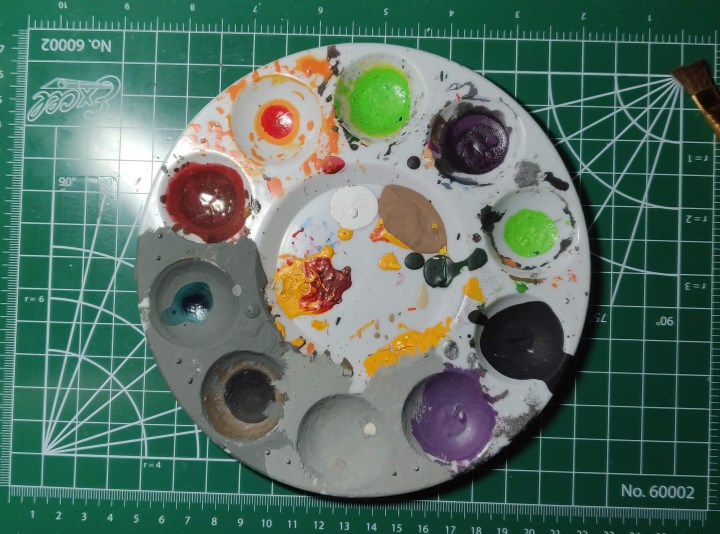
These are the most common, and good ones to start out with. You can find them in round or square sizes, and range from six to ten cups. Round ones usually have a space in the middle for extra mixing. The cups can hold a decent amount of paint, which is good if you’re mixing up a base coat for large models. Paint can easily be peeled off the plastic surface when dry, so you’ll be able to use it for a long time. The cups also help keep the paint contained, which can be a bit of an issue when using a flatter surface to mix.
Ceramic Tiles
Once you get used to mixing your colors, you can move to a flatter surface that gives a little more freedom. Ceramic tiles work well because they will not absorb the paint, and you can usually find a color that matches your primer (white, grey, or black). If you only want to mix two drops of paint, this is ideal, since you won’t have to dedicate an entire cup to a very small amount of paint. Like the plastic cup palettes, you can easily peel or scrape the paint off when dried to free up more space.
Wet Palettes

These are the Cadillacs of palettes. Wet palettes are designed to hold water underneath a top layer, allowing paint to remain wet for hours, if not days. You can buy dedicated wet palettes, or you can make your own using parchment paper, a plastic container, and a paper towel. They’re extremely versatile, and greatly reduce the amount of wastage from paint drying up before you use it. Mine isn’t exactly the best looking, but it gets the job done, and has significantly improved my painting by extending the life of my mixed colors. To make your own, just take a plastic container, put a wet paper towel in the bottom, then cut a piece of parchment paper to fit. You can seal it with the lid to extend the life of the paint.
And there you have it. Not a huge post, but a little more than I wanted to go into on the Workspace post. Out of these options I suggest the wet palette for versatility and waste reduction, but some people prefer the cup palettes, and others like the tiles. Either way, just go with what you like best, and you’ll be fine!
 The Okay Tabletop